There are two aspects to quality. The first is understanding what matters to the customer and designing a product or service that meets their needs. This need not necessarily be something technologically advanced or with all sorts of bells and whistles (indeed, pointless complexity can be a turn-off for some). It simply needs to do what the customer wants it to do, be available when they need it, and at a cost they feel offers value.
The second is developing an efficient process that delivers the product or service right first time, on time, every time. Getting things right first time means fewer defects. This minimises costs, maximises productivity, facilitates on-time delivery, and enhances customer satisfaction and profitability.
Phil Crosby debunked the myth that higher process quality means increased cost. He pointed out that getting quality right first time costs less than getting it wrong, since fixing any problems that we create absorbs time and money and incurs an irrecoverable loss of production capacity, lowering overall volumes and productivity.
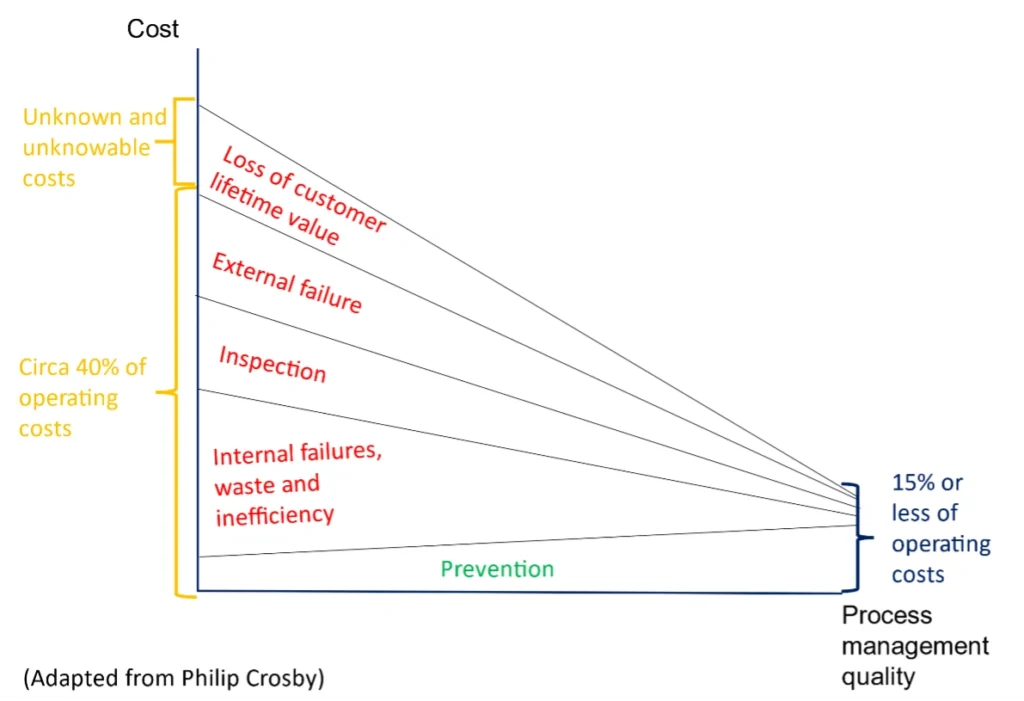
His model (Figure 1, below) suggests that the activities required to prevent problems, i.e. to set up and run the process properly, take around 15% of operating costs. If, instead, problems are allowed to occur, the costs of inspection and fixing quality fails detected either externally or internally amount to around 40% of operating costs. On top of this there is what Deming called the ‘unknown and unknowable’ costs associated with creating unhappy customers who complain, want discounts, leave and discourage others from buying from us.
The upshot is that process quality must come first or we open the door to all manner of problems with productivity, reliability, customer satisfaction, cost and profitability. Investing time in getting the offering right and in getting the process right creates loyal customers and increases value-adding capacity. The very essence of working smarter, not harder.
 Contact Us